When the Sea Is for Watching, the Falls Are for Swimming
Published · October 2, 2026
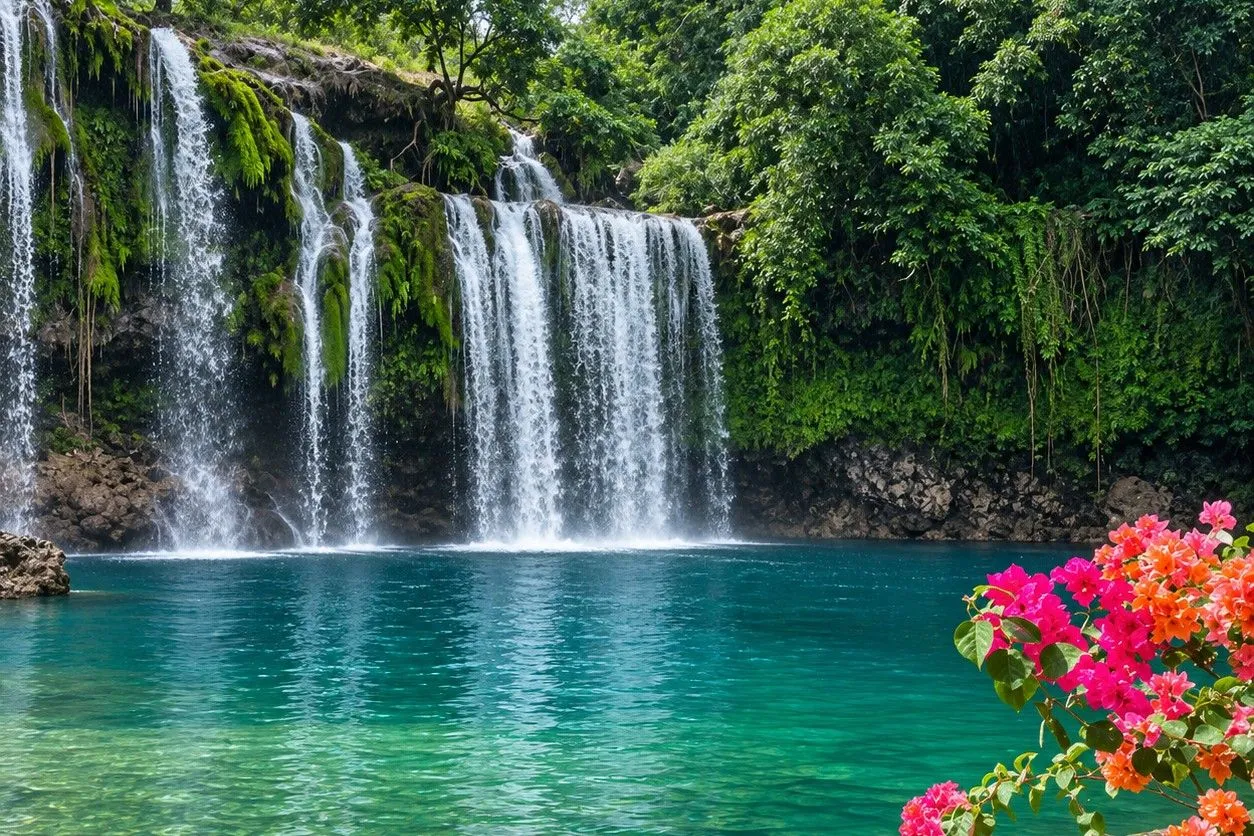
From November to February, our beach turns into a place for watching. The sea pulls back, rock formations surface along the shore, and the waves build. Thirty minutes inland, Bolinao Falls is running at full strength. The rains of June to September have filled the springs that feed it, and this is the season we send guests to the falls.
Two Falls, a Few Minutes Apart
Bolinao has two developed waterfalls about thirty minutes from Veue, and their names are simple. They are Bolinao Falls 1 and Bolinao Falls 2. Falls 1 is 16.4 km from our cabins and Falls 2 is 17.1 km, a few minutes from each other, so one trip covers both. They belong to a cluster of three cascades, and over the years the site has gained bamboo and cement stairs while keeping its rugged feel.
Bolinao Falls 1
Falls 1 is the taller of the two. It drops about twenty feet into a wide, deep basin, and it is the one people choose for deep water swimming. A ledge above the pool is where locals jump from. Its flow follows the rain, running thin in the summer dry months and sometimes stopping altogether, which is why timing matters more here than anywhere else on the peninsula. Come after the rainy season and it falls as a broad white curtain across the whole rock face.
Bolinao Falls 2
Falls 2 is wider and shorter, a broad cascade spilling into a larger pool. Shallow sections run around the edges, which makes it the better choice for families, for wading, and for anyone who would rather sit in the water than jump into it. Water runs here all year, so Falls 2 is the steady one. A few shaded picnic spots sit above the basin if you would like to bring lunch.
Where the Turquoise Color Comes From
The falls sit in flat, rocky farmland, fed by natural springs and river streams. Spring water keeps the pools cool all year and gives them their color, a turquoise green that looks edited in photographs and is entirely real. Indigenous trees shade most of the site, so the water stays cool even at midday. Downstream, the same water feeds the Balingasay River, so a river cruise and the falls are two ends of one water system.
Why November to February
The rainy season on this coast runs from June to September. By November the rains have passed and the springs are still full, so the falls keep their strength into the dry months. That window holds until about February. After that the summer heat arrives and Falls 1 begins to thin.
It is also a quiet time at the falls, with fewer visitors, so there is more room in the pools and on the rocks. And it is the half of the year when Patar is a watching beach. Spend the morning swimming in cool spring water, then come back to the cabins for the sunset over the rock formations.
Planning Your Visit
- Go in the morning for the quietest crowd and the best light.
- Drive yourself with Google Maps or Waze.
- See both falls in one trip, since they are minutes apart.
- Make a full day of it by adding the caves of Bolinao.
Bring cash for the fees. As of October 2, 2026, Bolinao charges a user fee that covers its attractions for four days, so keep the receipt or sticker if you have already paid it at the beach. Each falls also charges its own entrance fee, and parking, cottages, and life vests are extra.
Bring swimwear, aqua shoes for the rocks, a towel and a change of clothes, a dry bag for your phone, food and drinks, and sunscreen.
For jumping, go only where local guides confirm it is safe. Hidden rocks and shallow spots are hard to see from the ledge, and the pool is deeper than the surface suggests.
Our full guide to Bolinao Falls has maps and driving directions from the cabins. Plan your stay for November to February, and you will catch the falls at full strength and the beach at its most dramatic.
Dustin & June