Patar White Beach Is Golden
Published · August 12, 2026
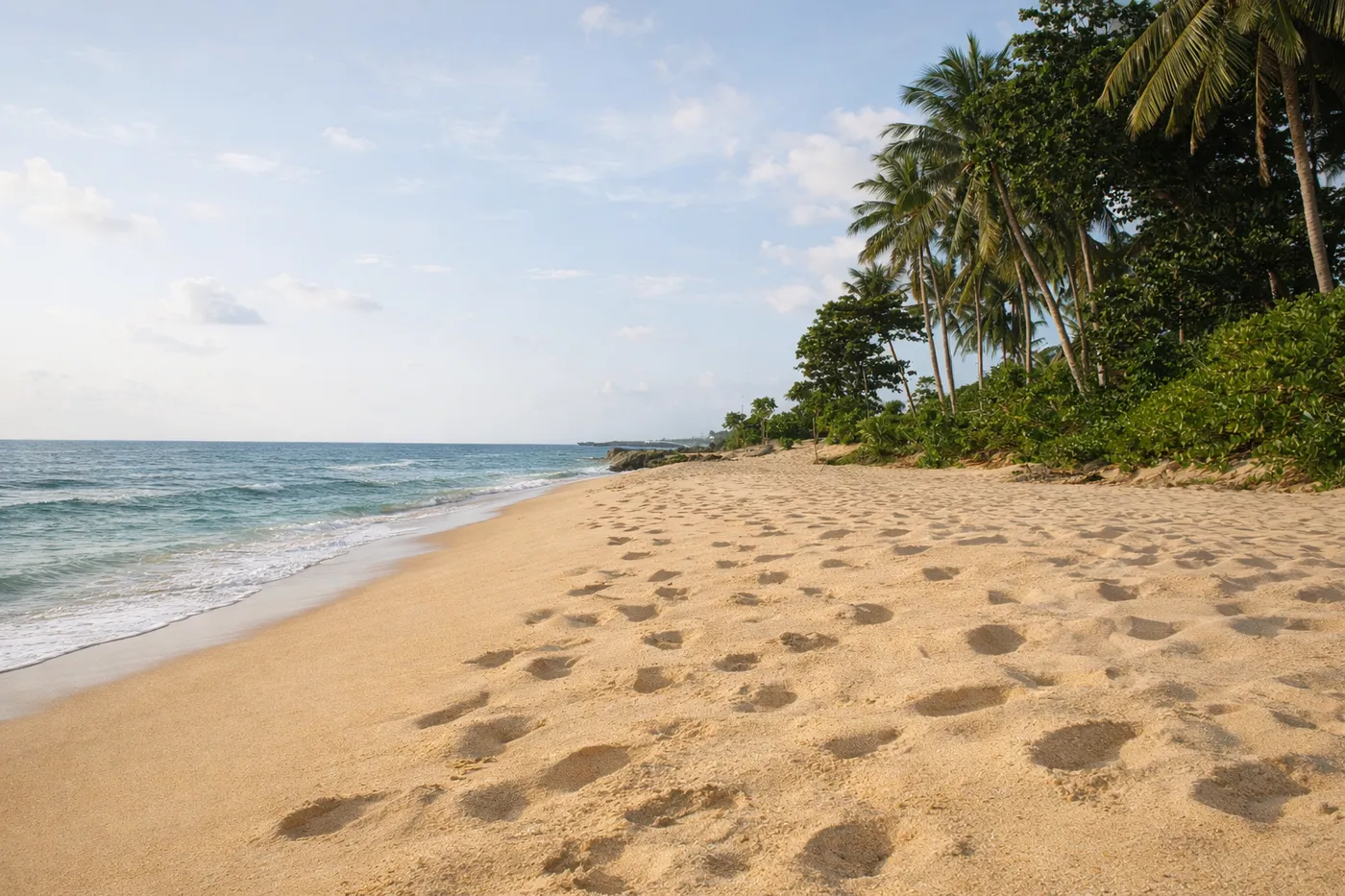
Patar Beach faces west, and it is really two different beaches depending on when you come. Here is what we tell guests who are making the trip for the first time.
Patar White Beach is Golden
In this part of the world, any pale beach gets called a “White Sand Beach,” mostly for marketing purposes. The Patar White Beach name settled early and it has suited the place well enough ever since.
The shore in front of Sitio Abrac is the stretch that name refers to, and the sand surprises you, because when you walk onto it, the color is actually gold. What lies underfoot is a warm amber that deepens as the afternoon goes on, and it stays soft through most of the year.
We mention it because guests often arrive picturing powder, and Patar gives them something warmer. In the hour before the sun goes down the sand turns closer to honey, which is when the beach is at its best and when nearly everyone reaches for a camera.
Facing West
Our side of Patar looks west, straight out at the West Philippine Sea, and that single fact shapes most of what a visit feels like. The sun drops over open water rather than behind a headland or a line of trees, so the sunset arrives unobstructed almost every evening of the year, and the sky usually works through several distinct colors before it finishes. This is why the Patar sunset is such a sight to behold. Maximizing the view of the sunset together with the beautiful beach is the reason we angled our cabins the way we did.
On a clear night with a full moon, the moon follows the sun down into the same water and sets over the ocean near dawn. It takes a little luck, and it is reason enough to set an alarm.
The west facing side may already be familiar to you. When a photograph of Patar turns up online it is nearly always taken from here. Plan your first visit around it.
The Real Patar Beach
Our address is Quintos Road, Sitio Abrac, Barangay Patar, Bolinao, Pangasinan. We write it out in full because on this coastline the address is worth reading closely.
Some beach resorts along Patar Road are in Barangay Patar too, and they are not stretching anything. The barangay tells you the address. The side tells you the beach.
Patar Beach is a particular place, a series of coves at the southwestern end of the Bolinao peninsula. Bolinao is divided into thirty barangays with defined boundaries, and the golden shore inside Barangay Patar is what the name properly describes. Coming along the coast road, you pass other barangays with their own beaches. When you reach Patar you will find two sides, one facing north and one facing west, and the west facing side is the one in the photographs.
The name also travels, and “Patar Beach” now does duty as a loose label for the wider west Bolinao coast. Both uses are in circulation, so the address will tell you more than a listing title does. Checking takes a second. Look at the barangay, and if it reads Barangay Patar you are in the right place, then ask which side of Patar the property sits on. Our full guide to the geography lays out the boundaries in case you are interested.
One tip for the drive. Navigate by your property’s name, not the beach’s, because a pin labeled only “Patar Beach” can set you down along Patar Road well before the sand begins.
The Seasons
The beach runs on a yearly cycle, and the month you choose decides which version of it you get.
Between March and August the sand lies thick and wide, the water sits calm, and the color is the turquoise most people picture. Mornings come up clear, the wind stays light, and the afternoons run long and hot. This is the swimming season, and it makes the gentler introduction. The rains arrive around May and run through October, and they change the sky rather than the sand, so the swimming holds through them. It is sunny and warm, the season people mean when they talk about going to the beach.
Between September and February the sea pulls back and rock formations surface along the shoreline that spend the rest of the year hidden. The waves build, the skies turn theatrical, and locals call it a watching beach instead of a swimming one. Calm days swim well, and the season belongs to long beachside walks among the formations. Do not underestimate it, because this is the most picturesque time of the year. Most of those moody, artistic photographs of Patar are taken around now.
The Tides
Behind all of this sits the monsoon. Amihan, the northeast wind, runs from roughly October to February and carries sand away from this part of the coast, thinning the beach to its narrowest between November and January, when the formations stand most exposed. Habagat, the southwest wind, blows from June to September and returns the sand, so that by March the shore is broad again. Photographs of the same spot in January and in June can look like two different places.
The daily tide keeps a gentler rhythm. The slope here is gradual, and close in the sea stays somewhere between ankle and chest deep, which suits wading and makes it easy to keep an eye on children. Then, fifteen to twenty meters from shore, the seabed falls away and the depth builds quickly. Past that line the waves carry more force and the currents pick up.
Swim where you can touch bottom unless you are a confident open water swimmer, and keep children in view. Bring aqua shoes, since sea urchins sit among the stones. Our caretakers read the sea each morning, so ask them before planning a long swim between September and February. Conditions change faster here than a forecast can follow.
When to Come
So the choice comes down to what you want from the water. March through August gives you turquoise and the widest sand. September to February brings rock formations, picture-perfect waves, and dramatic skies. Both repay the drive from Manila, and the only real mistake is arriving in one season while expecting the other.
The Public Beach
Patar Beach is open to everyone, and the shoreline runs in both directions from where our cabins sit, so you can walk as far as you like either way. Quieter pockets lie further along the coast, reachable on foot or by a short boat trip, and our caretakers can arrange a boat if you would like to see the coastline from the water.
The local barangay keeps the sea closed after dark, and the rule holds for every property along this coast. Our pools stay open until 10:00 PM, so the evening swim carries on in fresh water.
Pack aqua shoes, sunscreen, and something warm for evenings between November and February, when the wind comes off the sea with an edge to it. Then choose your month according to the Patar Beach you would like to see.
Dustin & June